Eighteen months ago, when I moved from Chief of Staff to Head of Product at Carbon Arc, I asked friends for advice. They all said the same thing: become technical. Fast.
I’d never worked in Product. Before that, at Bank of America and McKinsey & Co., the service was the product. I also had to pass/fail Carnegie Mellon’s 15-110: Principles of Computing course, the only computing class I took, so most of what I knew was self-taught. I take partial credit for the COVID-era spike in Stack Overflow questions. By April 2025, after using ChatGPT more, I could say I was “technical enough to be dangerous.”
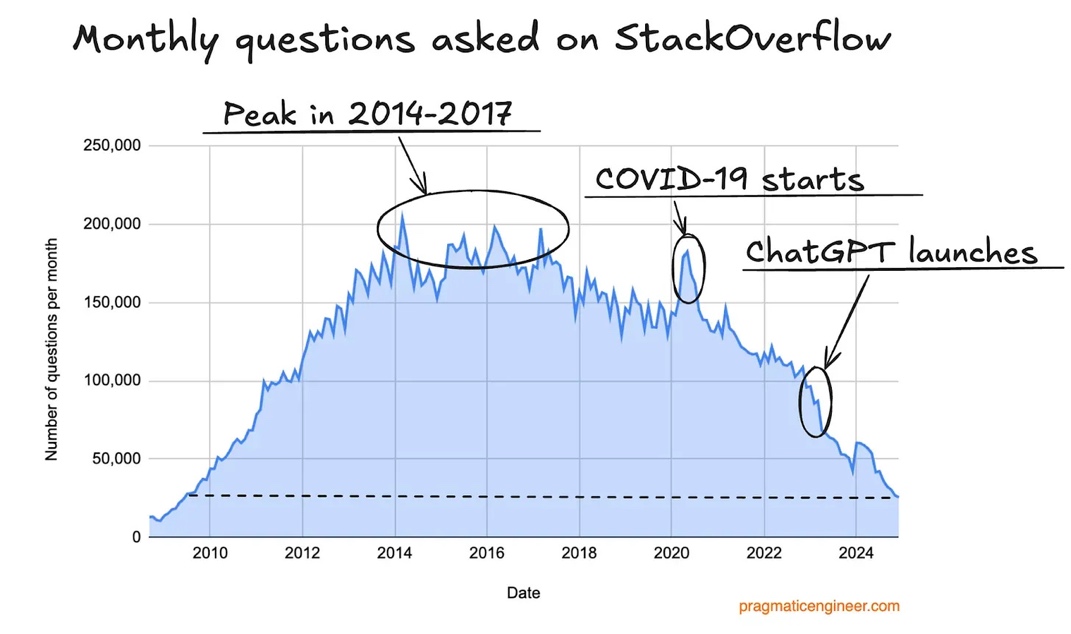
Source: The Pragmatic Engineer
Today, I’d describe myself as technical enough to spar with PMs and engineers. Claude Code and Cursor helped me go further on my own, ask better questions, and push back on ideas I would have accepted before. They also changed what I expect from the role and what I think PMs and engineers should expect from each other. It helps to have a CTO and engineers who explain things, challenge me, and sometimes bail me out.
I’ve been learning on the job while the job itself changes.
These are a few things I’ve learned, first as Head of Product and now as Chief Product Officer, as I help build the data infrastructure platform for the AI economy.
1. We’ve reset what PMs and engineers expect from each other
Good engineers are creative. They move fast and take time to learn what customers need. When an engineer works on an integration, they also learn the customer’s workflow, limits, and where the product may fall short. That hands-on knowledge should shape what gets built.
PMs don’t prescribe every decision to engineering leads. Equally, engineers don’t expect PMs to document every requirement upfront and spend the rest of their time tracking tickets.
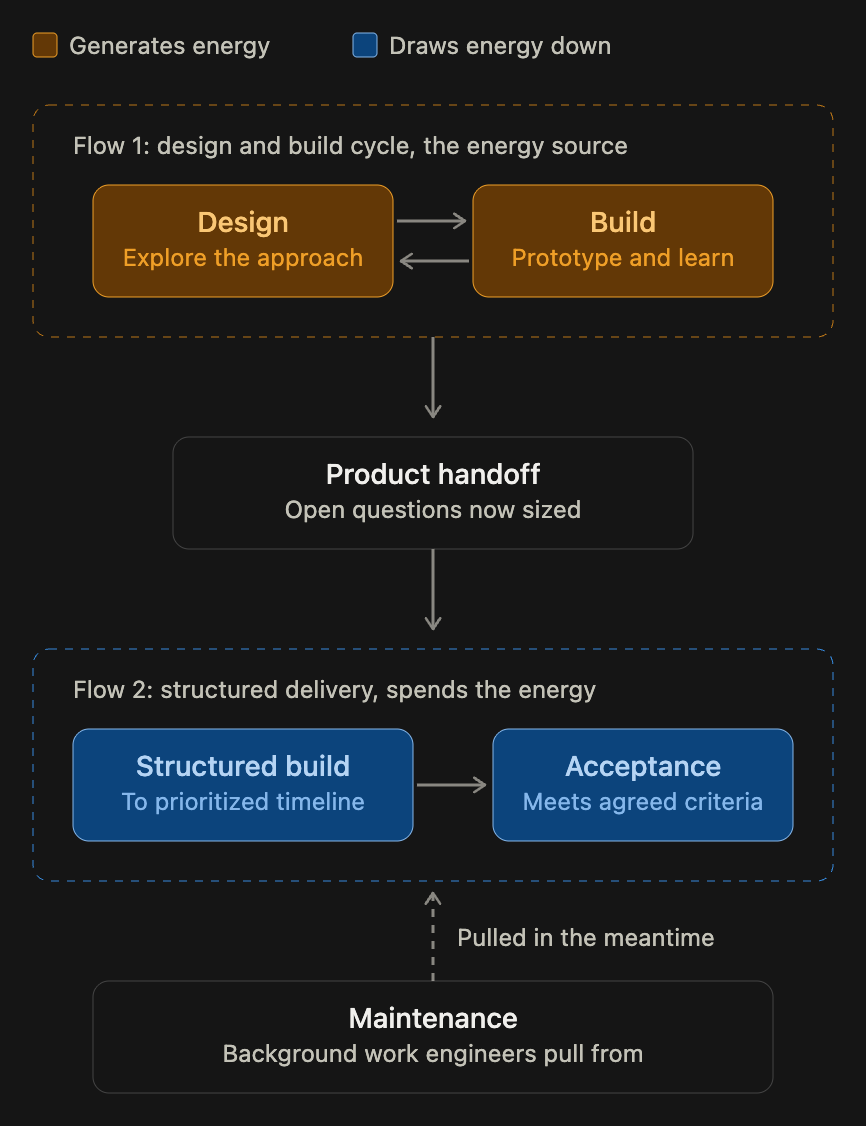
Our PMs use Claude Code, Cursor, and tight Linear workflows to create PRs and ship simple changes. Our engineers write their own tickets and use their own agents for the first pass. Now both sides make choices that used to sit firmly with the other. Side note: shoutout to Connor Moore, our Head of Platform Engineering, for moving us from Jira to Linear.
Anthropic draws a similar line. Amol Avasare, its Head of Growth, said on Lenny’s Podcast around 45:16 that “if a project is two weeks of engineering time or less, then the engineer is on the hook to effectively be the PM for that.”
For Product Managers, technical fluency (or at least the willingness to get there, fast) is now a baseline. Use the tools. Ask Claude to explain it like I’m five (pro tip: use “ELI5”). Explore the codebase. Come back with better questions. Engineers get more room to use judgment and to iterate as we learn.
We agree on the problem, constraints, and what success looks like, then work through the solution together.
2. Product becomes more commercial as it becomes more technical
Product sits in the middle, with Sales, GTM, and Partnerships on one side and Engineering and Research on the other. As strong engineers need less detailed direction, PMs have more room to get close to the commercial choices that shape the business.
Learn the workflow. Build enough to test a solution. Figure out what someone would pay. Learn how to shape a proposal that can become a repeatable product or fit inside the current architecture, instead of turning into a custom services business.
That starts to look a lot like a forward-deployed engineer, an implementation lead, or an AI strategist.
Bob McGrew, OpenAI’s former Chief Research Officer and a former Palantir leader, says there is “a real risk” that forward-deployed work turns into consulting. On Y Combinator’s podcast, he says product is what keeps that from happening, by finding “the correct problem that you’re solving, which is always a little bit more general than the problem that the customer is coming in with.”
That’s exactly why I like former consultants for the PM role. Understanding how a customer’s business works gives you a head start on knowing what’s worth building. I’m obviously biased, and you still have to get your hands dirty.
3. The faster we ship, the less I trust detailed roadmaps
The way our PMs and engineers now split the work lets us move faster. PMs can take straightforward changes further themselves. Engineers can move without waiting for every interaction to be approved. Fewer handoffs means less waiting and more time reacting to something that actually works.
Speed changes what a plan is worth. Every release teaches us something about how customers use the product, what they’ll pay for, and what we got wrong. The faster that happens, the faster a detailed plan goes stale.
At this pace, I have a hard time taking a sprint-level roadmap more than three months out very seriously. A Gantt chart that maps every feature for seven months from now assumes we will not learn much between now and then.
We still need strategy, priorities, and commitments. But further out, I want clarity on the problems we are betting on and what would make us change course.
4. It’s easier to say yes. That makes saying no harder
Fewer hours searching Stack Overflow. Faster first passes. More ideas that suddenly feel possible. Why not?
Every small request or idea starts to look tempting. Add enough of them and you get Frankenstein: inconsistent screens, duplicate features, and random colors that do not match the brand. We’ve since cleaned up the worst offenders (examples below, redacted, of course).
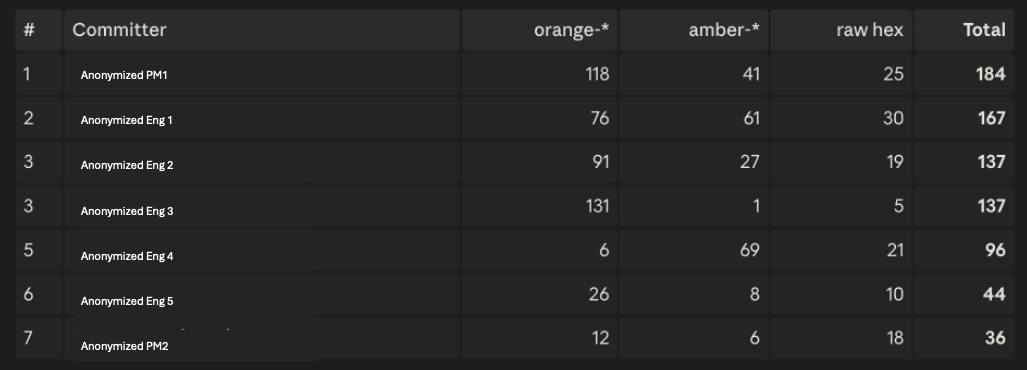
The cost of writing code has dropped. But every feature still adds work to maintain, explain, and fit into the rest of the product.
Karri Saarinen, Linear’s co-founder and CEO, says on Lenny’s Podcast around 40:27: “always design something for someone. It is very hard to design everything for everyone because you just end up with a very generalized solution.”
That becomes harder to stick to when almost every request feels cheap enough to say yes to. Each addition might make sense on its own. Someone still has to make sure the whole product does.
Nobody paying for your product wants it to feel vibe coded. They expect consistent colors, predictable interactions, and a product that feels like someone thought about the whole thing.
A design system matters more as more people, and agents, can ship. Big shoutout to Kevin Lee, Karl Deek, John Cusick, and the whole team who built one for us. Kevin wrote about how they created shared rules and checks. These rules help us move quickly without each person or agent redesigning the product one screen at a time.
The bar I want for our Product team is simple: understand the technology, connect the work to the strategy, and know what to leave out.
I’m still learning how to do all three well.
- product-management
- product-engineering
- ai-tools
- design-system
Written by
Yuvraj Kumar